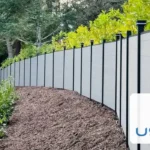

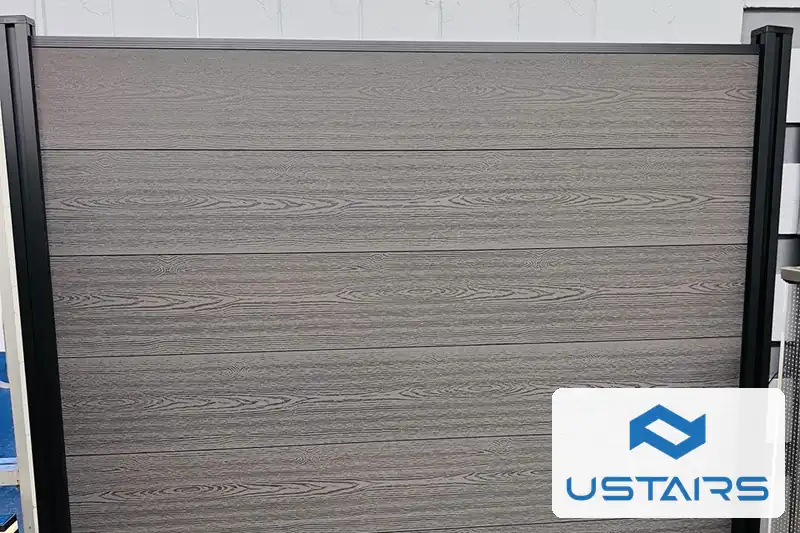
WPC fence is a fence built from wood plastic composite — boards or panels made by blending wood fibers with thermoplastic, then extruding the mixture into fence boards. It looks and feels like wood, but it never needs staining, sealing, or painting, and it will not rot, splinter, or attract termites. A well-built WPC fence lasts 25 years or more with little more than an occasional wash. The trade-off is the upfront price: composite costs more than wood on day one, and the cheapest WPC panels fade and stain faster than capped ones — so the panel you choose matters more than the material name on the box.
Quick picks: best privacy — solid 6-foot vertical WPC panels. Best modern look — horizontal WPC slats with black metal posts. Best value over 25 years — capped (co-extruded) panels, which cost more upfront and far less over the fence’s life.
What Is a WPC Fence Made Of?
A wood plastic composite fence starts with two ingredients: wood and plastic. The wood is usually wood flour or very short wood fibers — often reclaimed sawdust — and the plastic is a thermoplastic such as high-density polyethylene (HDPE), polypropylene, or PVC. The US Forest Products Laboratory puts the typical mix at 50–60% wood by weight and 40% or more thermoplastic, plus small amounts of additives: UV stabilizers, colorants, lubricants, fungicides, and coupling agents that help the wood and plastic bond. The mixture is heated and extruded into boards or panels, then cut to length. Because the wood content is what gives the board its wood-like look and feel, and the plastic is what keeps water out, the ratio matters: more wood means a more natural look and more moisture uptake; more plastic means better water resistance and a more uniform finish.
| Component | Typical share | What it does |
|---|---|---|
| Wood fiber / wood flour | 50–60% by weight | Gives the board its wood look, feel, and stiffness |
| Thermoplastic (HDPE, PP, or PVC) | 40% or more | Binds the board together and keeps water out |
| Additives (UV stabilizers, colorants, fungicides, coupling agents) | Small amounts | Resist fading, mold, and moisture; bond wood to plastic |
One term worth clearing up: a WPC fence is a type of composite fence, and “composite fence” is the broader category. In wpc fencing, the material is commonly formed into boards or panels and used with compatible posts, rails, and gates — but in product listings the two terms are often used interchangeably, and the label alone does not tell you the board’s formulation, whether it is capped, or how it is built. Compare the actual product specification, not the marketing name.
Capped vs Uncapped WPC Boards
The single most important quality difference in WPC fencing is the cap. Uncapped (monolayer) boards are solid composite all the way through — cheaper, but the wood fibers at the surface absorb moisture, fade in the sun, and stain more easily. Capped (co-extruded) boards wrap the composite core in a thin polymer skin, usually on three or four sides, that blocks UV, moisture, and mold. Capped panels cost noticeably more than uncapped, but they are the reason premium WPC fences carry 25-year warranties while budget ones fade within a few seasons. If a quote does not say whether the panels are capped, ask — it is the difference between a fence that looks new in ten years and one that does not.
WPC Fence Pros and Cons
Pros:
- No staining, sealing, or painting — ever. A wash with a hose and mild soap is the whole maintenance routine.
- Will not rot, splinter, warp, or attract termites. The plastic matrix seals the wood fiber away from moisture and insects.
- Long life. 25+ years is the standard manufacturer warranty for quality capped panels.
- Consistent look. No knots, no warping, no mismatched boards; the color runs through the board, so scratches show less.
- Same face on both sides on most systems — your neighbour sees a finished fence, not rails and brackets.
- Recycled content. Most WPC is made from reclaimed wood fiber and recycled plastic film.
Cons:
- Higher upfront cost than wood — the main reason homeowners hesitate (see the cost section below).
- Can fade. Uncapped boards lighten noticeably in strong sun; even capped boards weather slightly over the first year.
- Heavier than vinyl and harder to cut on site than wood — posts and footings carry more weight.
- Not truly “zero maintenance.” Dirt, mildew, and salt spray still need an occasional wash, and the Forest Products Laboratory’s research notes that early-generation WPC could absorb moisture and decay where the plastic matrix cracked — modern capped products address this, but the material is not indestructible.
- Limited color range compared with paintable wood — you choose from the manufacturer’s palette.
- Gets hot in direct sun. Dark composite boards absorb heat, which matters for a fence beside a seating area or pool.
WPC vs Wood vs Vinyl: Which Fence Is Best?
WPC is not the only low-maintenance fence material. Here is how the three most common privacy-fence materials compare:
| Feature | WPC fence | Wood fence | Vinyl fence |
|---|---|---|---|
| Lifespan | 25+ years (25-year warranties standard) | 10–15 years with regular maintenance | 20–30 years |
| Maintenance | Occasional wash; no staining or sealing | Stain or seal every 2–3 years | Occasional wash |
| Upfront cost | Around $125/ft installed | Lowest upfront | Mid-range |
| Rot, splinters, insects | No | Common without treatment | No |
| Fading | Capped boards resist fading; uncapped fade | Fades and greys without stain | Can yellow in strong UV |
| Look | Wood-like grain, consistent boards | Natural wood, weathers over time | Smooth, uniform, plastic look |
| Wind | Solid panels catch wind — posts must be set deep | Solid panels catch wind | Solid panels catch wind; can crack in cold |
WPC wins when you want the wood look without the maintenance cycle and you plan to stay in the home long enough for the math to work. Wood wins on upfront budget and on a fence you may replace within a decade. Vinyl wins when you want the lowest price for a clean white privacy fence and do not mind the plastic look. For San Jose’s dry summers and wet winters, the material choice matters more than most homeowners expect — see our guide to choosing the right fence material for San Jose’s climate for how each material holds up in Bay Area weather.
WPC Fence Styles: Panels, Boards, and Profiles
WPC fence panels are pre-assembled sections — boards already fixed between rails — that drop between posts. They install fastest and give the most uniform look, and they are the right choice for a straight run on flat ground. Composite fence boards are individual boards installed one at a time, which suits slopes, curves, and custom heights: each board can be cut and stepped to follow the grade. A single composite fence panel is typically 6 feet wide and 6 feet tall; boards come in lengths up to 8 feet and stack to whatever height the design calls for.
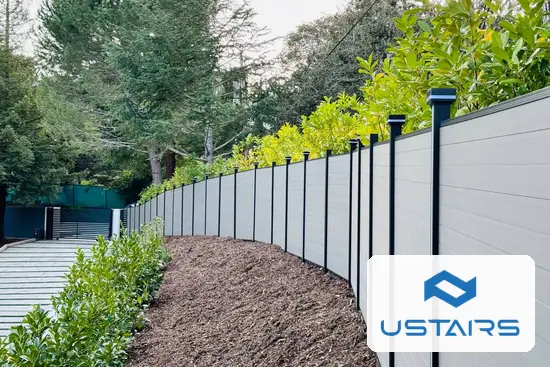
Three styles cover most Bay Area projects. Vertical privacy is the standard: interlocking vertical pickets with no gaps, the same finished face on both sides, and heights from 4 to 8 feet. Horizontal slat is the modern look: wide composite boards run horizontally between slim metal posts, with narrow gaps or none — the most requested style on contemporary homes, and the one that pairs best with metal railings and glass. Semi-privacy uses spaced boards or a lattice top section, keeping airflow and light while still screening the yard.
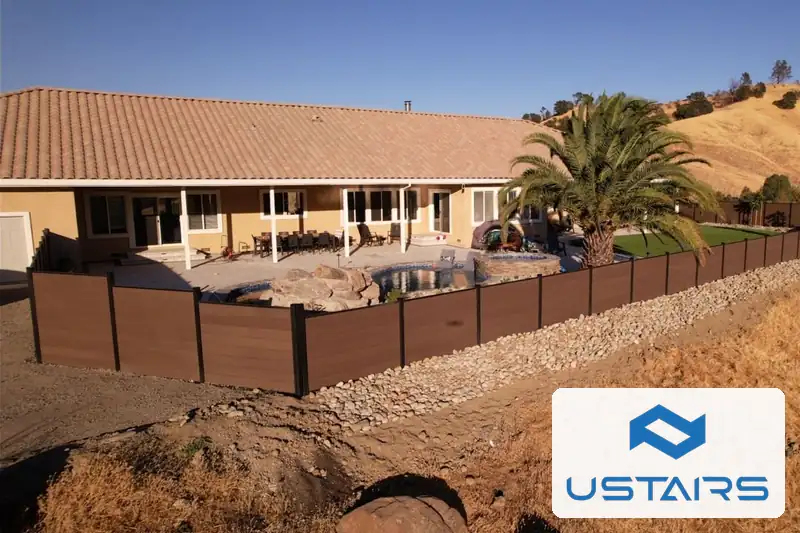
Posts matter as much as boards. Aluminium posts are the strongest and slimmest, and the best choice on a long run or a windy site; WPC posts match the boards but are bulkier; steel posts suit the horizontal slat look. Whatever the post material, posts go in concrete — a solid WPC panel catches wind like a sail, and a post set in dirt alone will lean within a season.
How Much Does a WPC Fence Cost?
There is no fixed price for a WPC fence — every yard is measured and priced on its own. As a guide from our own recent projects, composite fencing installed runs around $125 per foot, varying by length, height, terrain, and gates. At about $125 per foot installed, a 72 ft run comes to roughly $9,000. Materials-only composite fence panels run around $390 per panel, including one post and the top and bottom rails, and gates run around $750 each, varying by size, material, and automation.
What moves the number:
- Length and height. A longer run needs more panels, posts, and rails; a 7- or 8-foot fence needs more board per foot than a 6-foot one.
- Capped vs uncapped panels. Capped (co-extruded) panels cost noticeably more than uncapped — the single biggest material choice.
- Post material. Aluminium posts cost more than WPC posts and last longer.
- Terrain. Slopes need stepping or racking, retaining walls need special footings, and rocky soil adds digging time.
- Gates. Each gate adds hardware, hinges, and a heavier post — budget around $750 per gate.
- Old fence removal and disposal, and permit fees where they apply.
As a relative guide, a WPC fence costs more upfront than a wood fence and less than a masonry wall — and over 25 years, the absence of staining, sealing, and board replacement makes it the cheaper fence to own. Every project is priced on its own measurements, materials, and site conditions — the exact figure depends on your yard, your fence height, and your home. Call Ustairs or send the form with your photos and measurements for your exact range — quotes are free.
Installation and Maintenance
A WPC fence installs like a wood fence with heavier parts: posts set in concrete, rails or channels fixed between them, then panels or boards fitted in. The two details that decide whether the fence lasts are post depth and expansion gaps. Posts need concrete footings deep enough for the soil — a solid panel catches far more wind than a picket fence, and shallow posts lean. Boards need small expansion gaps at the ends, because composite expands and contracts with temperature more than wood does; a board butted tight against its post in winter will bow in summer. On a slope, the fence either steps down in level sections or racks to follow the grade — stepping is simpler and suits panel systems; racking follows the ground and suits individual boards.
Maintenance is straightforward. Rinse with a hose, wash with mild dish soap and a soft brush, and rinse again — once or twice a year, more often near the coast where salt spray builds up. Do not use a high-pressure washer on composite boards; it can damage the cap layer. Inspect the hardware once a season: tighten any loose brackets, check gate hinges, and clear soil or mulch away from the bottom rail so moisture does not sit against the boards. WPC does not need paint — but if you ever want to change the color, it can be painted with the right preparation; see our guide on how to paint a composite fence before you pick up a brush.
Bay Area Rules: Height, Permits, and Pool Fences
Fence rules are set city by city in the Bay Area, not by a single state code — and they vary more than most homeowners expect. The common pattern: a standard 6-foot fence in the side and rear yard typically needs no building permit, while front-yard fences are limited to 3–4 feet and must stay open enough not to block sightlines at driveways and corners. Taller fences, fences on corner lots, and fences near the street usually need a permit and sometimes a design review. HOAs add their own layer — many restrict fence materials, colors, and heights beyond what the city requires, so check your HOA rules before you order.
A fence around a pool is a separate code path from a yard fence: California requires pool barriers to meet specific height, gap, and self-closing gate rules, and a standard privacy fence does not automatically qualify. See our guide to pool fence requirements before planning a fence anywhere near a pool.
Before you build, confirm the current rules with your city’s permit office, check your HOA, and call 811 a few days before digging so buried utility lines can be marked. A survey costs far less than moving a finished fence off a neighbour’s property line.
Frequently Asked Questions
What is a WPC fence made of?
A WPC fence is made from wood plastic composite: wood fibers or wood flour (typically 50–60% by weight) blended with a thermoplastic such as polyethylene, polypropylene, or PVC (40% or more), plus small amounts of UV stabilizers, colorants, and fungicides. The mixture is extruded into boards or panels that look like wood but resist rot, insects, and moisture far better than natural timber.
How long does a WPC fence last?
Quality capped WPC fencing lasts 25 years or more — most premium manufacturers back their panels with a 25-year limited residential warranty. Uncapped panels fade and stain sooner, and any WPC fence lasts longer with posts set in concrete and boards kept clear of standing soil and mulch.
Is a WPC fence better than a wood fence?
For most homeowners who plan to stay put, yes: WPC needs no staining or sealing, will not rot or attract termites, and outlasts wood by a decade or more. Wood wins on upfront cost and on a fence you expect to replace within ten years. The honest answer depends on how long you will own the home and whether you will actually maintain a wood fence — most people do not.
Can you paint a WPC fence?
Yes, with the right preparation — clean the boards, use a primer and paint rated for composite or plastic surfaces, and expect to repaint every few years, since paint does not bond to composite the way it bonds to wood. Most homeowners choose WPC precisely to avoid painting, so pick a color you will like for the fence’s full life.
How much does a WPC fence cost?
There is no fixed price — every fence is priced on its own measurements. As a guide from our recent projects, composite fencing installed runs around $125 per foot, varying by length, height, terrain, and gates; materials-only panels run around $390 each, and gates around $750 each. Send photos and measurements for a free exact quote.
Get a WPC Fence Built for Your Yard
The right WPC fence is measured to your yard, built from capped panels that suit your exposure, and installed on posts set deep enough to hold a solid panel through Bay Area winters. Ustairs designs and installs composite fencing across the Bay Area, from solid privacy fences to horizontal slat designs — and if your project needs security or a pool barrier instead, our metal fencing covers that too. Talk to a stair railing installation specialist and get a free quote for a fence you will not have to stain, seal, or replace.
Sources
- US Forest Service Research — Ibach (2010), “Durability of wood-plastic composite lumber”. https://research.fs.usda.gov/treesearch/36662
- Trex Fencing — Architect’s Booklet (Fencing Supply Group, 2024). https://trexfencingfds.com/wp-content/uploads/2024/11/Trex-Fencing-Gates-for-Commercial-Applications-Architects-Booklet-FDS-111824.pdf
- FastFence — “WPC Fence vs. Composite Fence: What’s the Difference?” https://www.fastfenceus.com/articles/wpc-vs-composite-fence
- FenceGuides — “Trex Fencing Cost & Prices Per Foot Compared”. https://www.fenceguides.com/types/trex/