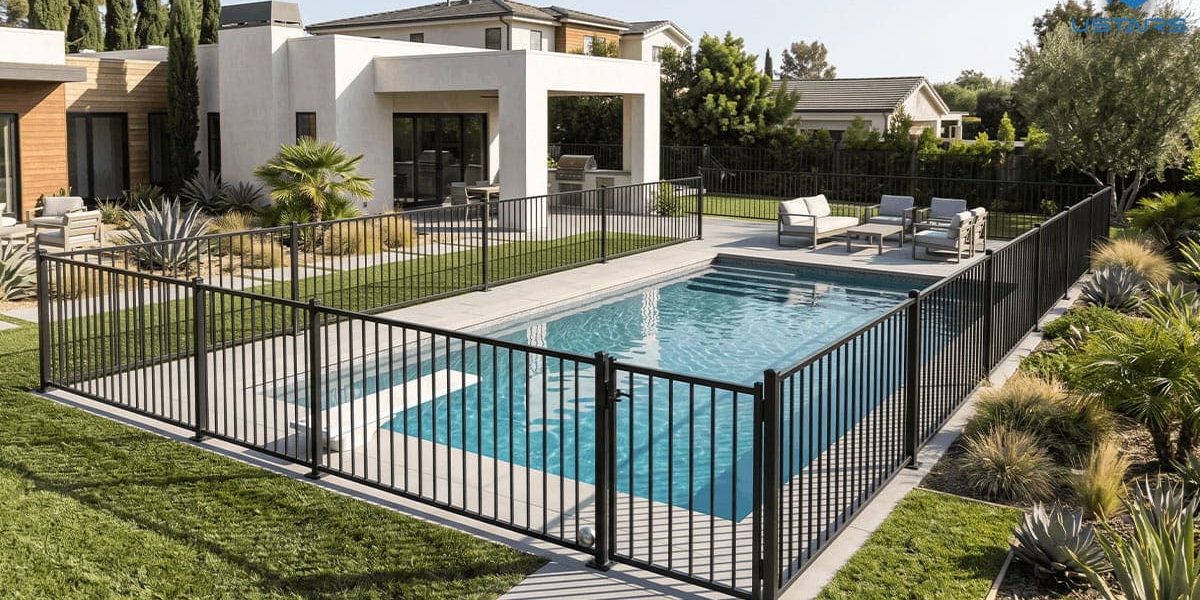
If you’re planning a pool project in California, pool fence requirements are one of the first things you need to get right. The state sets a clear legal minimum, but counties often add their own rules on top of it, and a single missed detail like the wrong gate swing can hold up your final inspection. This guide covers exactly what’s required for height, gaps, materials, and safety layers, so your project passes inspection the first time with Ustairs.
What Does California Law Actually Require?
Pool fence requirements in California start at the state level, then get layered with local rules. Every private home with a pool or spa falls under this law, whether it’s new construction or a permitted remodel.
The Swimming Pool Safety Act and HSC §115922
This section is the foundation. Any private single-family home with a pool or spa must have at least one approved safety feature before the permit is finalized. SB 552 updated this law effective January 1, 2025, so older articles online may already be outdated. Pool size or shape doesn’t matter here; if a permit is involved, compliance is required.
Minimum Barrier Specifications (height, gaps, ground clearance)
Section 115923 sets the exact physical specs inspectors check:
| Requirement | Standard |
|---|---|
| Minimum height | 60 inches (5 feet), measured from outside grade |
| Ground clearance | No more than 2 inches between fence bottom and ground |
| Gap size | No opening large enough for a 4-inch sphere to pass through |
| Surface | No handholds or footholds a child could climb |
If your existing yard fence falls short on any of these, adding a compliant barrier is usually the quickest fix. Many homeowners go with our metal fencing options for this exact reason, and it’s a project our installation team at Ustairs handles often across the Bay Area.
The Two-Layer Safety Rule Since 2018
A single fence used to be enough. Not anymore. Since the 2018 update to the Pool Safety Act, every new or remodeled pool needs at least two separate safety features working together, not just one.
Homeowners can mix and match from these seven options:
- A property fence or wall that fully isolates the pool from the house
- Removable mesh fencing meeting ASTM F2286, with a self-closing, self-latching gate
- An approved safety pool cover (manual or automatic) meeting ASTM F1346
- Exit alarms on doors leading directly to the pool area
- Self-closing doors with a latch mounted at least 54 inches above the floor
- A pool alarm that sounds when the water surface is disturbed (ASTM F2208)
- Any other device approved as equally protective by your local building department
Most homeowners already have layer one covered with their property fence. The second layer is usually where decisions get made, and a removable mesh fence paired with a self-latching gate tends to be the fastest way to satisfy it without changing the look of the yard. That’s a common request we get at Ustairs, especially from clients who don’t want a second permanent fence cutting through their backyard design.
Choosing the Right Fence Material for Your Pool
Meeting code is only half the job. The material you choose affects maintenance, cost, and how well it holds up against California’s coastal air, dry heat, or wildfire-season dust, depending on where you live.
Mesh vs Glass vs Aluminum vs Wrought Iron
- Mesh fencing is the go-to for the second safety layer. It’s removable, budget-friendly, and meets ASTM F2286 without altering your yard’s design. The trade-off is a less polished look compared to permanent options.
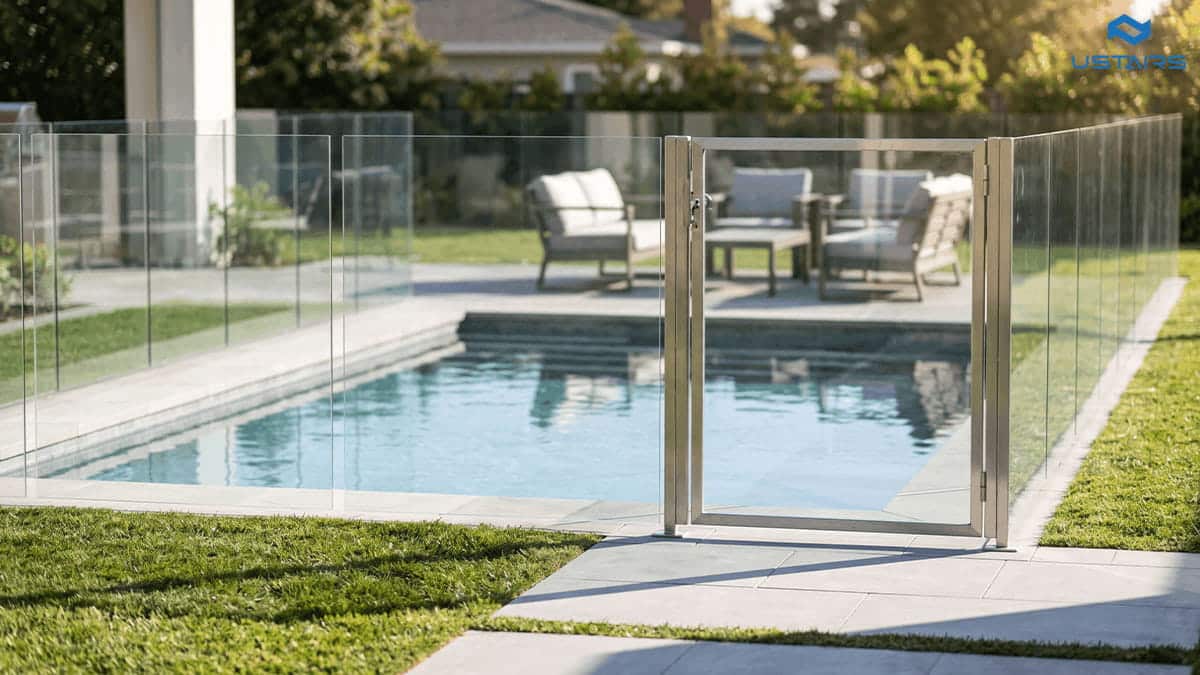
- Glass railings give an unobstructed view of the pool and work well as a primary barrier when specified correctly. Frameless or semi-frameless panels meet height and gap codes, though not every glass type holds up the same way near salt air or heavy moisture, which we covered in more depth when we looked at whether glass railings suit wet or coastal environments.
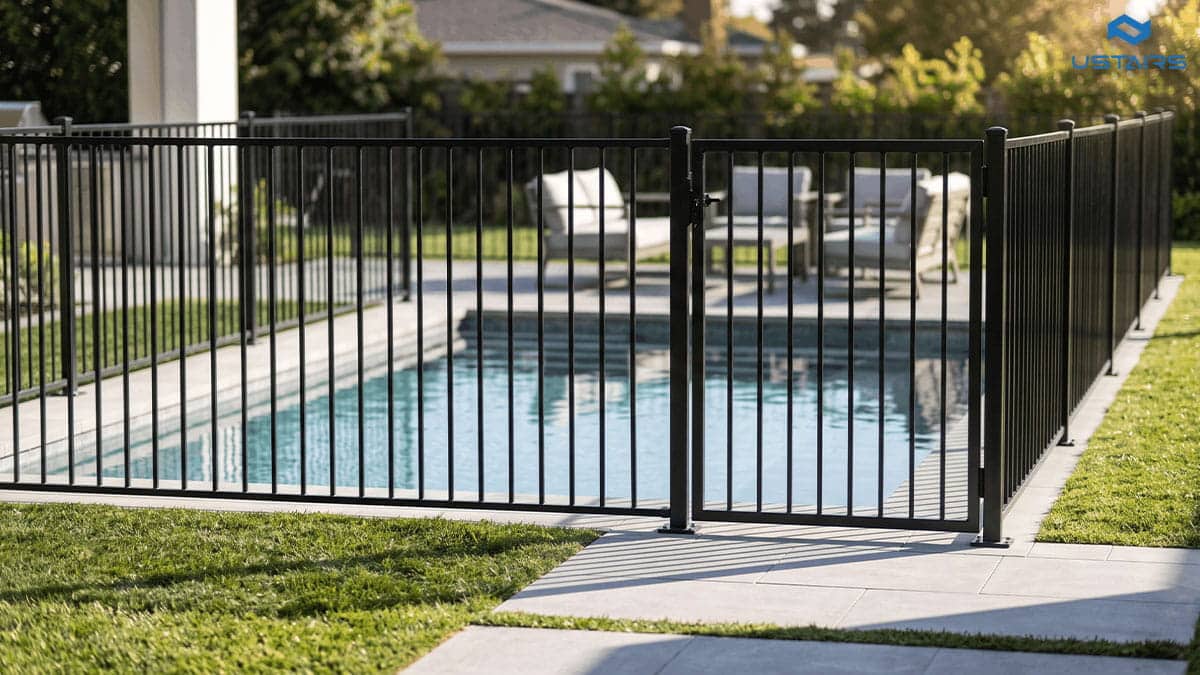
- Aluminum balances durability with a lower price point than glass or wrought iron. It resists rust well, though coastal properties still need to watch for pitting over time.
- Wrought iron is the most traditional and visually substantial option, but it demands more upkeep, especially in humid or salt-heavy areas where rust becomes a recurring issue.
Climate plays a bigger role in this decision than most homeowners expect. We broke this down by region in our guide on choosing the right fence material for San Jose’s climate, which applies just as much to pool enclosures as it does to perimeter fencing.
| Material | Best for | Watch out for |
|---|---|---|
| Mesh | Fast, code-compliant second layer | Less permanent look |
| Glass | Unobstructed views, modern homes | Salt air exposure on certain finishes |
| Aluminum | Low maintenance, coastal areas | Minor pitting over years near the coast |
| Wrought iron | Classic, heavy-duty appearance | Higher maintenance, rust risk |
Whatever direction fits your home, our team at Ustairs installs all four options and can walk the yard with you to figure out what actually holds up long-term versus what just looks good on day one.
Common Mistakes That Fail Final Inspection
Inspectors see the same errors over and over. Most aren’t expensive to fix, but they do delay approval if caught late.
- Gate swings the wrong way. Pool gates must swing away from the pool, not toward it. This trips up more homeowners than any other rule.
- Latch height is off. Self-latching mechanisms need to sit at least 54 inches above the ground, and installers sometimes mount them lower for convenience.
- Climbable furniture near the fence. Planters, chairs, or grills placed too close to the barrier can count as a foothold in an inspector’s eyes.
- Gaps wider than they look. A 4-inch sphere test is stricter than it sounds; even slightly warped mesh or bent slats can fail it.
- Only one safety layer installed. Homeowners sometimes assume the property fence alone satisfies the 2018 rule, forgetting the second required feature entirely.
Catching these before the inspector shows up saves a second visit and another wait on the schedule. It’s also why we walk every Ustairs installation through a quick pre-inspection check before calling it done.
Conclusion
Getting pool fence requirements right the first time saves you money, delays, and a second inspection you didn’t plan for. Between state law, county add-ons, and material choices that actually last in California’s climate, it’s easy to miss a detail that matters. If you’d rather skip the guesswork, our team at Ustairs can assess your yard, recommend the right barrier, and handle the installation from start to finish so your pool passes inspection without a second try.