A driveway gate is the first thing anyone sees of your home — and the hardest-working thing in the front yard. It has to look right, open every day without a fight, survive Bay Area sun and winter rain, and stay inside your city’s height rules. The good news is that the choice is simpler than the photo galleries make it look: your driveway narrows the list before your taste does. These driveway gate ideas cover 15 styles that work on Bay Area homes, from modern horizontal slats to wrought iron scrollwork, plus the measurements, materials, and Fremont rules that decide which ones fit your lot.
Quick picks: best modern look — horizontal slat steel in matte black. Best traditional look — wrought iron scrollwork between stone pillars. Best for a sloped driveway — a sliding gate. Best for privacy — a solid panel gate set back from the street. Best value over 20 years — galvanized mild steel with a powder-coat finish. These entrance gate ideas all come from the same starting point: measure the opening first, then fall in love with a style.
Our driveway gates are fabricated to your measurements in our Fremont shop — steel, aluminum, wood, and composite — rather than bought off the shelf, so any of the styles below can be built to your opening, your slope, and your city’s rules.
Before You Choose: 4 Measurements That Decide the Design
Most people start with a photo they saved. That is a good start, but the driveway decides more of the design than the photo does. Walk out to the opening with a tape measure and check four things before you pick a style:
Width. Measure post to post. A pair of swing gates typically covers an opening 10 to 16 feet wide; a narrow opening can be a single leaf or a slide. The width also decides the weight — and the weight decides the hinges, posts, and operator.
Slope. Stand at the opening and look up the drive. If it rises behind the gate, a swing gate may not have room to open inward — the leaves would hit the rising grade. That single fact rules out swing gates on many hillside lots.
Side room. Check whether a straight fence line runs beside the opening, because that is where a sliding gate parks when open. A sliding gate needs a clear lateral run roughly as long as the gate itself — more for a cantilever design.
Power. Note whether there is power near the gate. If not, a new circuit or a solar setup becomes part of the plan, and that changes the cost and the timeline. These four answers narrow the list fast — and they are the first four things any fabricator will ask. Good driveway gate designs start from the lot, not the catalogue.
Modern Driveway Gates: 5 Ideas
1. Horizontal Slat Steel
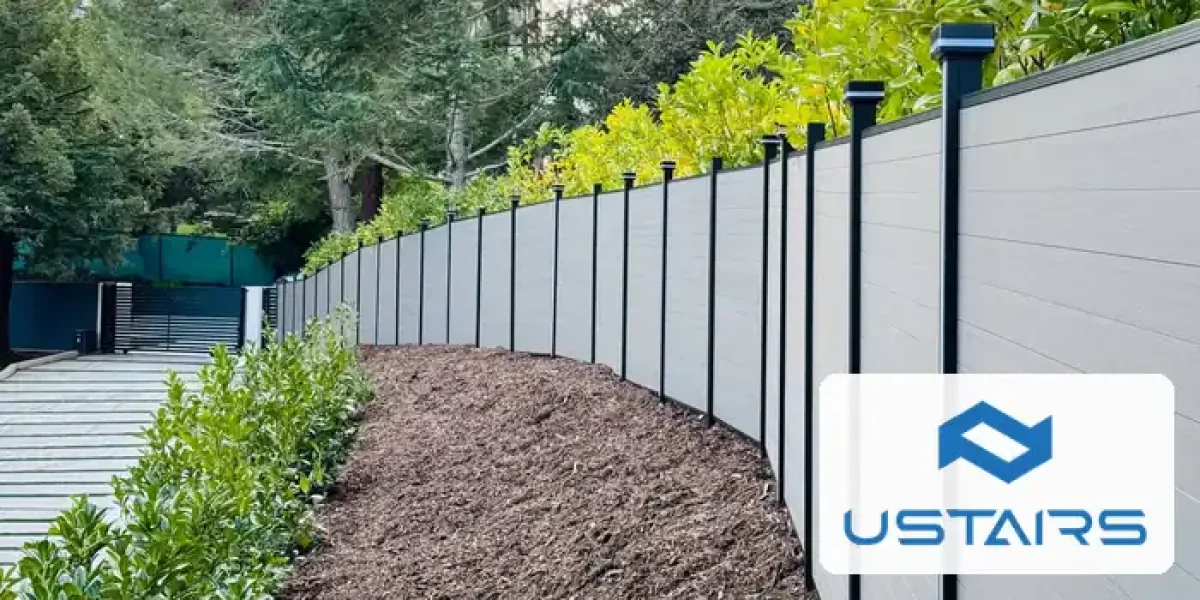
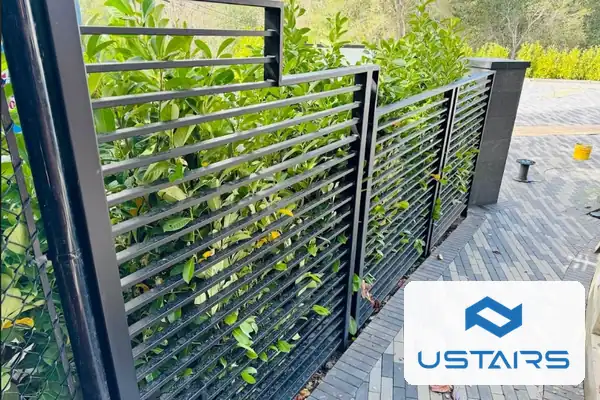
Black steel slats, spaced to set the privacy level — tighter gaps hide the driveway, wider gaps let light and air through and catch less wind. It is the most requested modern look on contemporary Bay Area homes, and it pairs naturally with a horizontal-slat fence so the gate and the fence read as one entrance. Powder-coated steel holds its finish for years with almost no care.
2. Laser-Cut Steel Panel
A pattern, a tree, a family initial, or a geometric design cut into a steel panel — filling the whole gate or one accent section. Light through the cut-outs throws shadows on the driveway that change through the day. Ask how open the pattern is before you commit: a dense cut-out acts like a solid gate in the wind, and the operator has to be sized for it.
3. Frosted Glass Insert
Frosted glass panels set into a metal frame — privacy without a solid wall, and light still reaches the entrance. It is a high-end look that suits newer builds and homes with glass railings elsewhere. The glass is tempered safety glass, and the frame carries the weight, so the panels themselves are not structural.
4. Minimalist Flat Panel
Large, solid metal panels with clean lines and no ornament — the gate as architecture, not decoration. Maximum privacy, and the simplest surface to keep clean. The trade-off is wind: a solid gate catches the full force of a gust, so the posts, hinges, and operator all have to be sized for a solid leaf, not an open one.
5. Iron Frame with Wood Infill
The combination most homeowners ask for right now: an iron frame carries the weight and keeps the leaves straight, while wood boards add warmth and privacy. It ties the gate to a house that already has both — dark railings and wood trim — and the steel frame is what keeps a wood gate from sagging over time. Left unsealed, the wood weathers toward silver grey; sealed, it keeps its colour.
Traditional Driveway Gate Ideas
6. Wrought Iron Scrollwork
C-scrolls and S-scrolls, baskets, twists, finials, and medallions — the ornamental vocabulary of Victorian and Mediterranean ironwork, and the gate that makes an entrance feel like an estate. One honest point: true wrought iron is no longer commercially produced, so modern “wrought iron” gates are mild steel forged to look like the original — the same strength, the same look, and the same care needs. Scrollwork suits period homes, colonial architecture, and any entrance that wants to be a focal point.
7. Arched Steel Dual Swing
An arch lifts the middle of the gate and lets the ends meet the columns low, so the entrance looks taller without the whole gate being tall. Vertical pickets keep it open enough that the house still shows from the street. It suits traditional and Mediterranean homes and wide openings with masonry columns — and in Fremont, remember the height is measured at the top of the arch, not the ends.
8. Stained Cedar on a Steel Frame
Customers love the look of wood, and most know it is softer than steel — which is why a good cedar gate has a steel frame behind the boards to keep the leaves straight. Cedar takes stain beautifully and suits Craftsman and farmhouse homes. Choose the stain colour in daylight against the house, because the same stain looks different on every wall colour.
9. Open Iron Picket
Simple vertical pickets, an open frame, and nothing to hide behind — the gate that keeps the garden and the house visible. It lets wind pass through, which is an easy win on exposed hillside lots and ridgelines, and it is the lightest option for the hinges and operator. Open iron is also the style most cities accept closest to the street, because it does not block sight lines.
10. Farmhouse Board-and-Batten
Vertical boards with narrow battens over the joints, in a warm stain or a painted finish — the gate for a farmhouse, a ranch, or a Craftsman home that wants character without ornament. It is one of the most forgiving styles to maintain: a board can be replaced without touching the frame, and a fresh coat of stain every few years keeps it looking new.
Practical Driveway Gate Ideas
11. Sliding Gate for Sloped Driveways
When the driveway climbs right behind the gate, a swing gate cannot open — a sliding gate can. A single panel rides on a ground track and slides parallel to the fence line, so the slope behind the gate does not matter. It needs a straight, clear run beside the opening about as long as the gate itself, and the track has to be kept clear of grit and debris so the gate rolls freely.
12. Cantilever Sliding Gate
A cantilever gate is a sliding gate with no ground track: the panel hangs from a counterbalanced support and rolls on an above-ground track. Nothing sits at ground level to collect gravel, dirt, or runoff, so it suits gravel drives, uneven ground, and lots where a ground track would keep jamming. The trade-off is a longer panel — the counterbalance section adds length, so it needs more side room than a tracked slide.
13. Bi-Fold Gate
A bi-fold gate folds in half as it opens, so each leaf needs only half the swing room of a standard gate. It is the answer for a short driveway where a car parks close to the gate, or a tight frontage where a full swing would hit the house or the street. Two leaves, one hinge line down the middle, and an operator sized for the folding motion.
14. Solid Composite Panel Gate
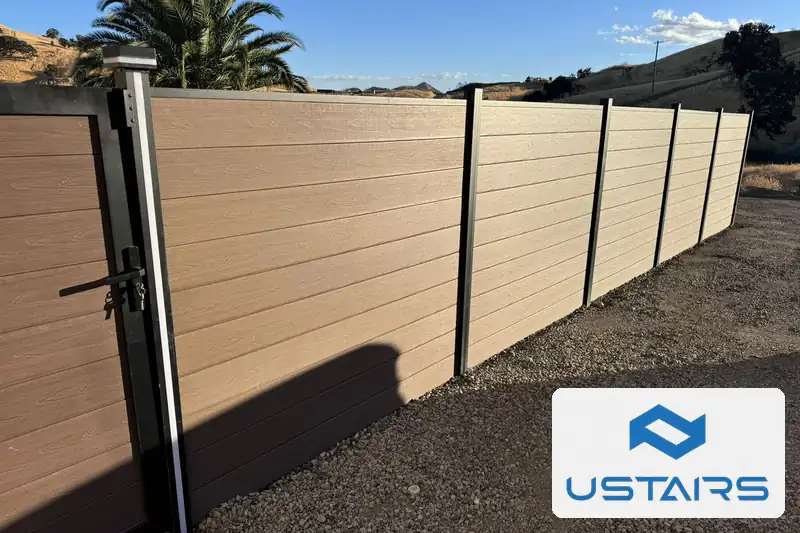
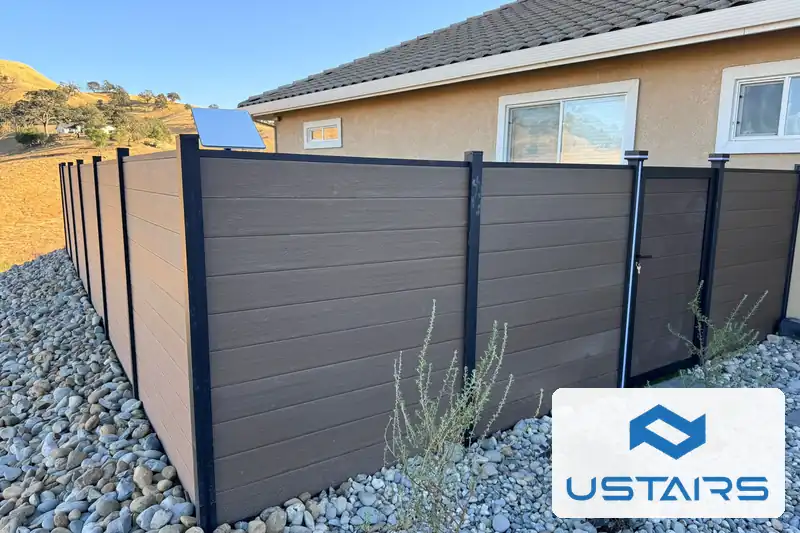
Composite panels look like wood, need no staining, and will not rot, warp, or attract insects — the lowest-maintenance gate on this list. Painted or capped composite holds its colour for years, and a solid panel gives full privacy. It is also the gate that matches a composite fence exactly, so the entrance and the fence line read as one build.
15. Matched Pedestrian Gate + Driveway Gate Set
The driveway gate gets the attention, but the pedestrian gate beside it gets used ten times a day — and a matched set is one of the most practical fence gate ideas for a front entrance. Same style, same material, same finish: a 3- to 4-foot pedestrian gate beside the sliding or swing driveway gate, with a self-closing latch so it never stands open. Match the set to your entry doors and the whole front of the house reads as one design — and if the door needs replacing too, see our guide on how to install a door before you order either.
Swing vs Sliding vs Bi-Fold: Which Fits Your Driveway?
Once you like a style, decide how it opens. This is where the driveway from the measurement section comes back — and it settles the question for most lots. Every one of these driveway gate ideas can be built as a swing gate or a sliding gate; the style is the look, the mechanism is the fit.
| If your driveway | Lean toward | Why |
|---|---|---|
| Is flat, with room inside the opening | Swing (single or dual) | Simple hardware, the classic look, the easiest operator to fit |
| Climbs right behind the gate | Sliding | Swinging leaves would hit the rising grade |
| Has a long, straight fence run beside it | Sliding | The gate has somewhere to park when open |
| Is gravel, uneven, or floods at the track line | Cantilever slide | No ground track to jam with gravel or runoff |
| Is short, with cars parked close to the gate | Bi-fold | Each leaf needs only half the swing room |
| Ends at columns with no side run | Swing | A slide needs the side run this lot does not have |
| Sits on a windy ridgeline | Either, with an open design | Open infill catches less wind on any operator |
Decide the mechanism from the lot, then pick the style from the house.
Gate Materials Compared
The gate and the fence read as one entrance, so driveway fence ideas should be chosen together with the gate, not after it. For how each material behaves in Bay Area weather, see our guide to choosing the right fence material for San Jose’s climate — the same wet winters, dry summers, and inland salt air apply to gates.
| Material | Strength | Rust / rot | Maintenance | Look | Lifespan |
|---|---|---|---|---|---|
| Mild steel (galvanized + powder coat) | Highest — rigid, takes detail work | Rusts if bare metal is exposed — the finish is the protection | Annual inspection + touch-ups; repaint every few years | Traditional or modern; ornate scrollwork possible | 20–30 years with maintenance |
| Aluminum | Good — lighter, needs heavier profiles on wide gates to avoid flex | Does not rust | Wash occasionally; almost none | Clean and modern; limited ornate work | 25–30 years |
| Wood (cedar / hardwood on a steel frame) | Good — the steel frame carries the load | Rots if unsealed; needs stain or seal | Stain or seal every 1–2 years; board replacement | Warm and traditional; the most natural look | 15–20 years with care |
| Composite | Good — solid panels, no flex issues | Does not rot or warp | Wash occasionally; almost none | Wood look, modern or traditional | 25–30 years |
| Stainless steel (316 grade) | Very high — rigid like iron | Does not rust, even near the coast | Wash occasionally; almost none | Sleek and modern; minimal ornament | 50+ years |
Mild steel is the standard for most residential driveway gates: it is strong, weldable, and takes forged detail work that aluminum cannot. The finish system matters more than the metal — hot-dip galvanizing under powder coat protects the steel even if the coating gets chipped, and skipping the galvanizing to save money upfront is a false economy in a climate where winter rain finds every bare spot. For the coating itself, ask what grade of powder coat you are getting: the AAMA 2604 and 2605 specifications set the performance tiers, and 2605 — the architectural grade, with 4,000 hours of humidity resistance and 10 years of Florida exposure testing — is the one worth specifying near the coast or on a south-facing entrance. Aluminum suits shorter pedestrian gates and garden gates, where the spans are short and the load is low; on a wide driveway gate it needs heavier profiles to avoid flex, which narrows the cost gap with steel. Stainless steel in 316 grade is the premium option for waterfront and exposed coastal lots, where nothing else holds up.
Bay Area Rules: Height, Permits & Fire Access
A design that looks right in a photo can still be too tall for the front of your lot. In Fremont, the rules are in Municipal Code Chapter 18.171, Fences and Hedges, and they shape the gate itself, not just the paperwork:
- Front yard height. A fence or gate in a required front yard is limited to 48 inches — four feet. That is the rule most people trip over: a six-foot driveway gate at the street is not allowed in Fremont’s required front yard, so a tall gate usually sits at or behind the front setback line, with the front section lower and more open.
- Side and rear yards. Up to 8 feet in a required side or rear yard. Between 7 and 8 feet, a building permit is required.
- Permits. A building permit is required for a fence over 7 feet tall, a concrete or masonry wall over 4 feet, and a retaining wall of any height. A wood, vinyl, or metal fence at 7 feet or less does not need one.
- Corner lots. A fence within 5 feet of the side street lot line is limited to 48 inches, and inside the sight triangle at the corner nothing may be more than 30 inches above the top of the curb — so drivers can see around the corner.
- Finished side. A fence with one finished side must be turned so the finished side faces the street.
- HOA rules sit on top. Association rules on height, material, style, and colour apply in addition to the city’s rules, and the stricter one wins. Get the approval letter before anything is ordered.
- Fire access. A gate across a fire apparatus access road needs approval from the fire code official and an approved means of emergency operation that stays functional at all times. Most California fire departments require a Knox Box or Knox key switch on or within six feet of any gate across a fire lane — a rapid-entry system keyed to the local fire department. Most homes’ driveway gates do not cross a fire access road, but long or shared driveways and hillside lots can, so confirm with the fire prevention bureau before the design is final.
- Pool gates. If the gate guards a pool, California’s pool barrier rules apply on top of everything else: the enclosure must be at least 60 inches high, gates must open away from the pool and close and latch by themselves, and the latch must sit at least 60 inches above the ground. Our guide to pool fence requirements covers the full set of rules.
Every Bay Area city has its own version of these numbers — Newark, Union City, Hayward, and San Jose all differ from Fremont — so confirm the current rules with your city’s planning division before you order. A gate that has to be rebuilt to a lower height is the most expensive kind.
Automation & Safety: What UL 325 Means for Your Gate
Most driveway gates on this list can be automated, but the operator is a safety device, not just a convenience. UL 325 is the standard for gate, door, and window operators, referenced in the International Building Code, the International Residential Code, and the International Fire Code — and products installed as automatic vehicular gates must be listed and labelled to it.
What that means in practice: a vehicular gate operator must have independent primary and secondary entrapment protection — typically a built-in reversing system that stops and reverses the gate when it meets an obstruction, plus a photoelectric sensor or an edge sensor that watches the gate’s path. The safety devices have to be installed and tested by a qualified installer, following the manufacturer’s instructions — an operator fitted without its sensors is not a finished job. The operator also needs a manual release, so the gate can be opened by hand during a power outage. (Our guide to automatic gates covers operators, access control, and solar power in full.)
How Much Does a Driveway Gate Cost?
There is no fixed price for a driveway gate — every gate is measured, fabricated, and installed to one opening, so the price follows the width, the material, the design, and whether it is automated. As a guide from a recent fencing project, standard gates run around $750 each, varying by size, material, and automation. A full driveway gate system — two leaves or a long sliding panel, posts and footings, and an operator — is a bigger project than a standard gate, and it is priced on its own measurements.
What moves the number: the opening width and the gate’s weight; the material (steel, aluminum, wood, composite, stainless); the design complexity (scrollwork and custom motifs cost more than straight bars); the finish (powder coat vs galvanizing under powder coat); automation (operator, keypad, intercom, power run); the posts and footings (surface-mounted vs core-drilled, concrete vs soil); site access (hillside lots and tight frontages add install time); and removal of an old gate. Every project is priced on its own measurements, materials, and site conditions — the exact figure depends on your opening, your gate type, and your home. Call Ustairs or send the form with your photos and measurements for your exact range — quotes are free.
Frequently Asked Questions
What is the most popular driveway gate style?
Right now, most Bay Area homeowners ask for modern designs — horizontal slat steel in matte black, or an iron frame with wood infill so the gate looks warm and stays robust. Of all the driveway gate ideas in this guide, those two are the ones fabricators build most. The right style still depends on the house and the lot, and the driveway usually narrows the list before taste does: a sloped lot needs a slide, and a front-yard gate in Fremont is limited to 48 inches unless it sits back from the street.
Should I choose a swing gate or a sliding gate?
It depends on the lot, not the style. A swing gate needs clear room for the leaves to open, and an uphill driveway can block that. A sliding gate needs a straight run beside the opening instead — about as long as the gate itself. Measure both spaces before choosing: if the driveway climbs behind the gate, slide; if it is flat with room inside the opening, swing.
How tall can my driveway gate be in Fremont?
In a required front yard, 48 inches — four feet — under Fremont Municipal Code section 18.171.010. In a required side or rear yard, up to 8 feet, with a building permit required between 7 and 8 feet. On a corner lot, a fence within 5 feet of the side street lot line is limited to 48 inches, and inside the sight triangle nothing may be more than 30 inches above the top of the curb. Confirm the current rules with the Planning Division before you order.
How much does a driveway gate cost?
There is no fixed price — every gate is priced on its own measurements. As a guide from a recent fencing project, standard gates run around $750 each, varying by size, material, and automation; a full driveway gate system with automation is a bigger project. The opening width, the material, the design complexity, the finish, and the site all move the number. Send photos and measurements for a free exact quote.
Do I need a permit for a driveway gate in Fremont?
A fence or gate at 7 feet or less does not need a building permit in Fremont; over 7 feet, a concrete or masonry wall over 4 feet, or any retaining wall, a permit is required. An automated gate also involves electrical work, which is permitted separately. If the gate crosses a fire apparatus access road, it needs approval from the fire code official and a Knox key switch for emergency access. HOA approval, where one applies, comes before any of it.
Get a Driveway Gate Built for Your Home
The right driveway gate is measured to your opening, built to a design that suits your home, finished to survive Bay Area weather, and installed to your city’s rules. These driveway gate ideas are a starting point — the finished gate is always custom. Ustairs designs and installs driveway gates across the Bay Area, from modern horizontal-slat slides on hillside lots to wrought iron dual swings between stone pillars. Talk to one of the stair railing installation specialists that measures, fabricates, and installs in-house — and get a free quote for an entrance that works as well as it looks.
Sources
- Fremont Fence Solutions — Do I Need a Permit for a Fence in Fremont? — https://www.fencecontractorfremont.com/fence-permit-fremont/
- UL Solutions — UL 325 50th Anniversary & Key Safety Issues — https://www.ul.com/news/ul-325-50th-anniversary-key-safety-issues
- LegalClarity — Fire Lane Requirements in California: Signs & Penalties — https://legalclarity.org/what-are-the-fire-lane-requirements-in-california/
- Finishing and Coating — Powder Coatings and AAMA: How to Meet the Specifications — https://finishingandcoating.com/index.php/powder-coat/1731-powder-coatings-and-aama-how-to-meet-the-specifications
- Jeff and Simon Ironworks — Driveway Gates Vancouver: Steel vs Aluminum, Cost, Timeline — https://www.jeffandsimon.com/news/custom-metal-gates-vancouver/