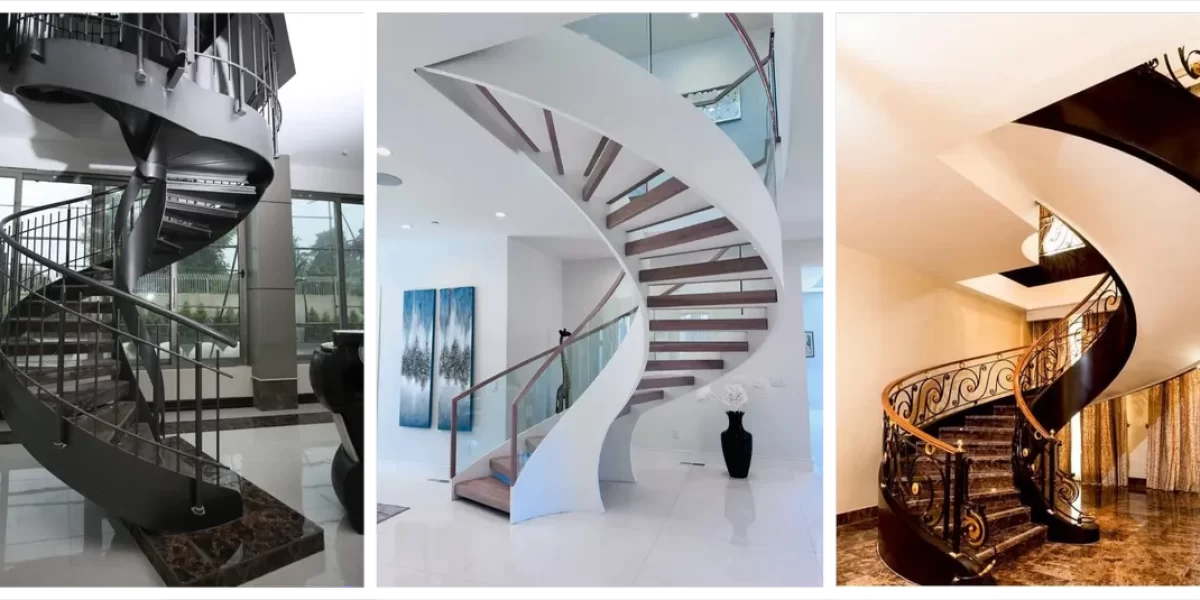
Spiral stairs can be both stylish and functional, but whether they are dangerous depends on their design, construction, and usage. Here’s a breakdown of the potential risks and how to mitigate them:
Potential Risks of Spiral Staircases
- Narrow Treads
- Spiral stairs often have narrower treads (the part you step on) compared to traditional stairs, which can make them harder to navigate, especially for people with larger feet or limited mobility.
- Uneven Step Depth
- The inner part of each step is narrower than the outer part, which can lead to missteps or loss of balance.
- Steepness
- Spiral stairs are typically steeper than standard stairs, increasing the risk of falls, particularly when descending.
- Limited Handrail Support
- If the handrail is poorly designed or absent, it can make the stairs less safe, especially for children, the elderly, or those with mobility issues.
- Visibility Challenges
- The spiral design can make it harder to see the steps clearly, especially when descending, increasing the risk of tripping.
- Space Constraints
- Spiral stairs are often used in tight spaces, which can make it difficult to carry large items or move comfortably.
When Are Spiral Stairs Most Dangerous?
- For children, elderly individuals, or people with mobility challenges.
- In high traffic areas where many people use the stairs frequently.
- When the stairs are poorly designed, with inadequate tread depth, steep angles, or lack of handrails.
How to Make Spiral Stairs Safer
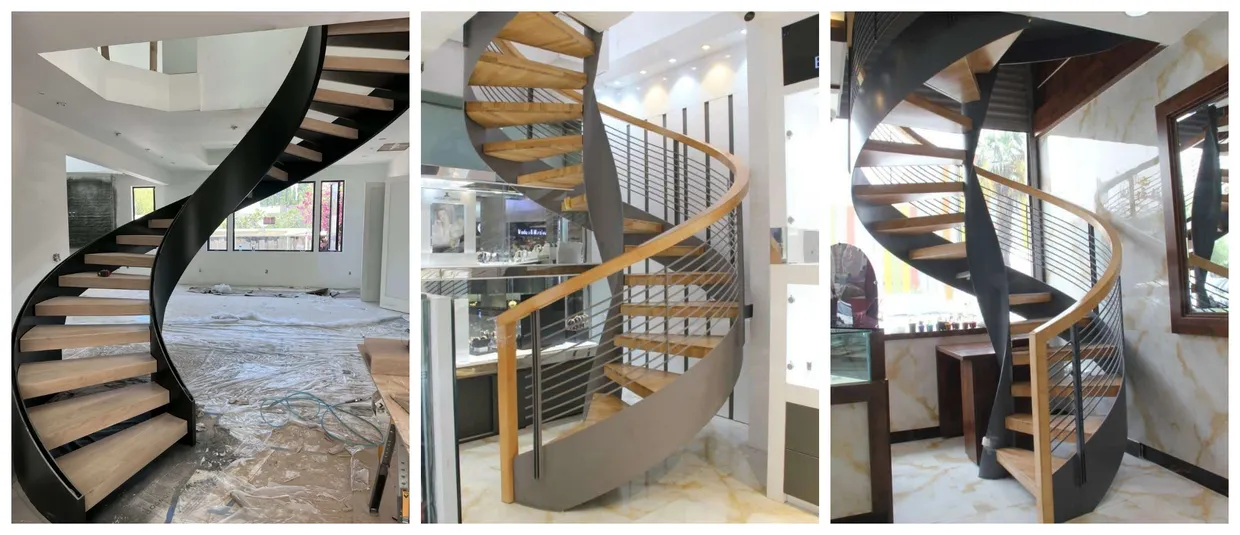
- Follow Building Codes
- Ensure the stairs comply with local building codes, which often specify minimum tread depth, riser height, and handrail requirements.
- Wider Treads
- Design the stairs with wider treads (at least 26 inches/66 cm in diameter) to provide more stable footing.
- Proper Handrails
- Install sturdy handrails on both sides of the stairs for added support.
- Non Slip Surfaces
- Use non slip materials for the treads to reduce the risk of slipping.
- Adequate Lighting
- Ensure the staircase is well lit to improve visibility, especially at night.
- Gentle Slope
- Avoid overly steep designs. A gentler slope makes the stairs easier and safer to use.
- Regular Maintenance
- Check for loose steps, wobbly handrails, or other hazards and repair them promptly.
Advantages of Spiral Stairs
- Space Saving: Ideal for small areas where traditional stairs wouldn’t fit.
- Aesthetic Appeal: Adds a unique, stylish element to your home or building.
- Versatility: Can be used indoors or outdoors, in residential or commercial spaces.
Conclusion
Spiral stairs are not inherently dangerous, but their safety depends on proper design, construction, and maintenance. When built to code and used appropriately, they can be a safe and attractive feature. However, they may not be the best choice for households with young children, elderly individuals, or people with mobility issues. If you’re installing spiral stairs, consult a professional designer or architect to ensure they meet safety standards and suit your needs.
Frequently Asked Questions
What does the IRC require for spiral stair safety?
The International Residential Code requires spiral stair treads at least 7½ inches deep measured 12 inches from the narrow edge, risers no higher than 9½ inches, a minimum clear width of 26 inches, and at least 6 feet 6 inches of headroom. Handrails are required on the open side. California’s residential code mirrors these rules — always verify with your local building department.
Are spiral stairs safe for kids and seniors?
They demand more caution than straight stairs. The narrow inner treads and steeper pitch make missteps more likely, especially for small children, older adults, or anyone with mobility issues. If kids or seniors use them daily, add handrails on both sides, use non-slip tread surfaces, improve lighting, and consider whether a straight or L-shaped stair would serve better.
Are spiral stairs allowed as the main staircase in a home?
In most US jurisdictions, a code-compliant spiral stair can serve as the primary means of egress in a dwelling, provided it meets the IRC dimensional requirements. Some local codes are stricter, and spiral stairs cannot be the only stair in certain commercial settings. Check with your Bay Area building department before planning your layout around one.
How can I make my existing spiral stairs safer?
Add a second handrail on the inner side, apply non-slip tread strips or nosings, upgrade lighting at the top and bottom, and keep the stairwell free of clutter. Replacing worn treads and tightening loose balusters also helps. If the stair predates modern codes, a contractor can assess whether it can be brought closer to current standards.
Spiral Stairs vs Standard Stairs: IRC Requirements
| Requirement | Standard stairs (IRC) | Spiral stairs (IRC) |
|---|---|---|
| Minimum tread depth | 10 in | 7½ in (12 in from narrow edge) |
| Maximum riser height | 7¾ in | 9½ in |
| Minimum clear width | 36 in | 26 in |
| Minimum headroom | 6 ft 8 in | 6 ft 6 in |
| Handrail height | 34-38 in | 34-38 in (open side) |
Common spiral stair risk factors (illustrative share of reported missteps)
- Narrow treads — 35%
- Steep pitch — 25%
- Missing second handrail — 20%
- Poor lighting — 12%
- Slippery treads — 8%
Illustrative, based on installer experience — not a statistical study.
Related
Related: straight stairs · save space spiral staircase · loretto chapel staircase · california staircase code