Modern stair design has moved far beyond basic function. Today, many homeowners want a staircase that feels open, architectural, and visually striking. Two of the most popular options for contemporary interiors are mono stringer stairs and floating stairs. While they can look similar at first glance, they are not exactly the same in structure, installation, cost, or the type of space they suit best.
If you are planning a renovation or building a new home, understanding the difference between these staircase styles can help you make a smarter design decision. In this guide, we will compare mono stringer stairs and floating stairs in a practical way so you can choose the one that fits your layout, style, and budget.
For homeowners looking at custom stair solutions in Fremont and the Bay Area, this comparison can also help you understand what questions to ask before moving forward with fabrication and installation.
What Are Mono Stringer Stairs?
Mono stringer stairs are staircases built around one central structural beam, also called a single stringer. This beam runs underneath the treads and carries the load of the staircase. Because the support is centered, the treads appear clean and streamlined, giving the stairs a sleek and modern look.
This style is popular in contemporary homes because it creates visual openness without making the staircase feel too delicate. A mono stringer design still has a strong architectural presence, but it does not add the same visual heaviness as traditional side stringer stairs.
Mono stringer stairs are often made using steel for the central support, then finished with wood, metal, or other tread materials to match the interior design of the home.
What Are Floating Stairs?
Floating stairs are designed to create the illusion that the treads are suspended in air. In many cases, the structural support is hidden inside the wall, concealed within the stair system, or visually minimized so the staircase feels lighter and more open.
That means floating stairs are more of a visual concept than a single construction type. A staircase can look like it is floating even when it still relies on engineered support. Some floating staircases use hidden steel, some are wall mounted, and some use a mono stringer system as part of the overall design.
In simple terms, a mono stringer stair can sometimes create a floating look, but not every floating staircase is a mono stringer stair. That little plot twist matters a lot when you get into cost, engineering, and installation.
Mono Stringer Stairs vs Floating Stairs: The Main Difference
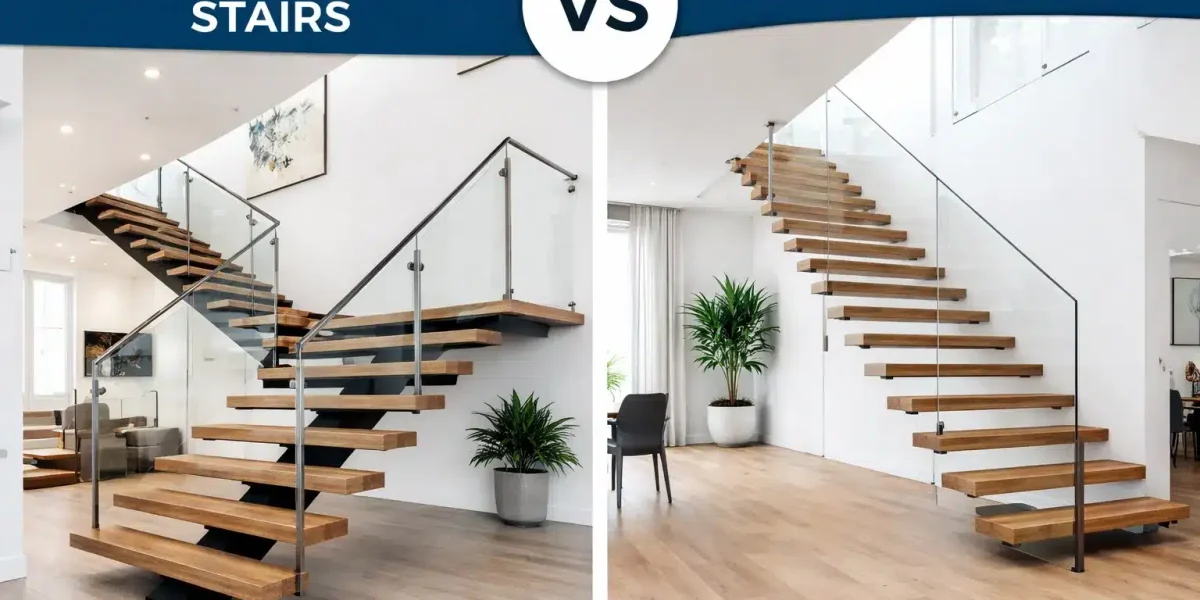
The biggest difference is this: mono stringer refers to the structural method, while floating stairs usually refer to the visual effect. A mono stringer staircase has one visible support beam under the treads. A floating staircase focuses on making the treads appear unsupported or minimally supported.
That distinction affects how the stairs are built, what type of engineering they require, and how dramatic the final look will be. If you want a staircase that feels modern but still visibly grounded, mono stringer stairs may be the right fit. If you want a staircase that feels ultra minimal and almost sculptural, floating stairs may be the stronger choice.
Visual Style and Design Impact
Both staircase styles work well in modern interiors, but they create different design impressions. Mono stringer stairs usually look bold, clean, and architectural. The central beam becomes part of the design language, especially when finished in black steel or another contrasting material.
Floating stairs tend to feel lighter and more dramatic. Because the support is hidden or minimized, they allow the treads to stand out more. This style works especially well in open concept homes, luxury remodels, and interiors where natural light is a major feature.
If your goal is to create a strong contemporary statement without making the stairs feel too visually fragile, mono stringer stairs can offer a great balance. If your goal is maximum openness and a gallery style effect, floating stairs often win on aesthetics.
When Mono Stringer Stairs Look Best
- Modern homes with metal, wood, or industrial finishes
- Spaces where the staircase should feel contemporary but substantial
- Projects where the central beam can become a design feature
- Homes that want a clean, custom look without hiding every structural element
When Floating Stairs Look Best
- Open concept interiors with lots of natural light
- Luxury renovations with minimalist design goals
- Spaces where visual openness is the top priority
- Homes that want the staircase to feel almost sculptural
Structural Considerations
Structure is where the real differences start to matter. Mono stringer stairs rely on one central beam, which must be carefully engineered to support the treads and expected loads. The strength of the system depends on the design of the beam, the span, the width of the staircase, and the materials used.
Floating stairs can involve more complex structural planning because the support may need to be hidden inside a wall or integrated into a custom steel framework. In some homes, additional framing or reinforcement is necessary before installation can even begin.
That means the right option is not just a style choice. It is also a matter of what your home can realistically support. In a remodel, that question becomes even more important because existing walls, floor systems, and available space can limit what is possible.
Installation Complexity
Mono stringer stairs are generally easier to install than fully floating stairs, although they still require precision fabrication and expert alignment. Because the main support is visible and centralized, the installation process can be more straightforward in many projects.
Floating stairs often require tighter tolerances, more coordination between trades, and more detailed planning before fabrication begins. If the system depends on hidden support inside the wall, the framing must be correct from the start. A small error in early construction can become a much bigger problem later.
This is one reason why many homeowners like the look of floating stairs but end up choosing mono stringer stairs instead. They still get a modern, open appearance, but with a system that can be a little more practical to build.
Cost Comparison
In many cases, floating stairs cost more than mono stringer stairs. The reason is not just the materials. It is the engineering, fabrication detail, hidden support requirements, and installation complexity that drive the price upward.
Mono stringer stairs can still be a premium custom product, especially when paired with hardwood treads, custom finishes, or high end railings. However, they are often more cost efficient than a true floating staircase that requires concealed structural work.
If budget matters, it is smart to compare the total installed cost, not just the base staircase price. The staircase itself is only one piece of the puzzle. Structural reinforcement, finishing work, railing design, and site conditions all affect the final number.
If you are also considering railing options, pairing your staircase with modern glass railing systems can dramatically change both the look and the project cost.
Safety and Code Compliance
Both mono stringer stairs and floating stairs must meet building code requirements for rise, run, tread depth, guards, and handrails. A staircase that looks stunning on Pinterest but ignores code is basically a very expensive way to annoy your inspector.
From a practical standpoint, mono stringer stairs often feel a little more visually grounded, which some homeowners prefer. Floating stairs can sometimes feel more open underfoot, especially if there are open risers and minimal railing systems. That does not make them unsafe when they are properly designed, but it can affect how people experience them.
For homes with children, elderly family members, or clients who want a greater sense of security, design details such as tread finish, railing style, and spacing become especially important.
Which Option Works Better in Small Spaces?
Both styles can work in compact homes, but the better choice depends on what you mean by “better.” If you want a staircase that visually opens up a smaller area, floating stairs usually have the advantage. They allow more light to pass through and create less visual bulk.
If you want a staircase that is simpler to engineer and still feels sleek, mono stringer stairs may be the smarter route. They provide openness without demanding the same level of concealed support that some floating stair systems need.
In other words, floating stairs often win in visual lightness, while mono stringer stairs often win in practical efficiency. The right answer depends on the room, the structure, and your priorities.
Best Materials for Each Style
Material selection plays a major role in how either staircase looks and performs. Mono stringer stairs commonly use a steel center beam with wood treads. This combination creates a warm modern look that works in many residential interiors.
Floating stairs often use thick wood treads, steel reinforcement, glass railings, or combinations that keep the final design as open as possible. The cleaner and simpler the palette, the stronger the floating effect usually becomes.
Some homeowners prefer a softer look with natural oak or walnut. Others want a bolder modern contrast with black steel, white walls, and frameless glass. The good news is that both mono stringer and floating stair designs can be customized to suit different architectural styles.
For homes aiming for a highly refined modern finish, many designers combine open stair systems with custom glass stair features to enhance light flow and visual continuity.
Maintenance and Long Term Practicality
Neither style is automatically high maintenance, but the details matter. Mono stringer stairs tend to be straightforward to clean and maintain because the structure is easier to access. The visible central beam can be inspected more easily, and the staircase often feels more solid in daily use.
Floating stairs can be just as durable when professionally built, but they may require more attention to finish quality, tread materials, and railing maintenance, especially in households with heavy use. Their minimal look also means scratches, dust, and surface wear can stand out more depending on the materials chosen.
If your household is busy and practical concerns matter as much as design, mono stringer stairs may offer a stronger balance between appearance and everyday usability.
Which Staircase Adds More Value to a Home?
Both styles can add value when they are well designed and properly installed. A custom staircase can elevate the overall feel of a home, make the interior more memorable, and improve first impressions for future buyers.
Floating stairs often create a stronger wow factor, especially in high end or architecturally modern homes. Mono stringer stairs, on the other hand, appeal to homeowners who want a contemporary look that still feels durable and practical. That can make them a safer choice for a wider range of buyers.
The best value usually comes from choosing the staircase that fits the architecture of the home. A dramatic floating design in the wrong setting can feel forced. A beautifully detailed mono stringer staircase in the right space can look timeless.
How to Decide Between Mono Stringer Stairs and Floating Stairs
If you are deciding between the two, start with these questions:
- Do you want the staircase to feel visually dramatic or structurally expressive?
- Is maximum openness your top priority, or do you want a balance of design and practicality?
- Does your home have the structural conditions needed for concealed support?
- What is your total project budget after engineering, fabrication, railings, and installation?
- Who will use the stairs every day, and how important is a sense of solidity underfoot?
If your answers lean toward practicality, structural clarity, and modern design, mono stringer stairs may be the better fit. If your answers lean toward minimalism, openness, and a more dramatic visual statement, floating stairs may be worth the added complexity.
Why Professional Design and Installation Matter
With both staircase styles, success depends on more than appearance. Proper design, accurate measurements, code compliance, fabrication quality, and installation precision all matter. Even the most beautiful stair concept can fall apart if the engineering or execution is off.
That is why working with an experienced team matters so much. A professional stair contractor can evaluate your space, explain what is realistically possible, and help you choose a design that works not just on paper, but in real life.
If you are planning a new staircase, railing upgrade, or full custom project, you can contact Ustairs here to discuss your layout, style goals, and installation needs.
Final Thoughts
Mono stringer stairs and floating stairs both offer a clean, modern alternative to traditional staircase designs, but they are not interchangeable. Mono stringer stairs focus on a central structural support that creates a sleek and grounded architectural look. Floating stairs focus on visual lightness and the illusion of suspended treads.
For many modern homes, mono stringer stairs deliver the best balance of style, stability, and practicality. Floating stairs can create a more dramatic visual effect, but they often come with more structural complexity and higher cost. The right choice depends on your home, your budget, and the type of statement you want your staircase to make.
When the design, structure, and materials are chosen carefully, either option can become one of the most impressive features in your home.
FAQs
Are mono stringer stairs considered floating stairs?
Sometimes they can create a floating look, but not all mono stringer stairs are true floating stairs. Mono stringer refers to the support system, while floating usually refers to the visual effect.
Which is more affordable, mono stringer stairs or floating stairs?
In many cases, mono stringer stairs are more affordable because they usually require less concealed structural work than fully floating stair systems.
Do floating stairs feel less stable?
When properly engineered and installed, floating stairs can be very stable. However, some homeowners feel they are visually lighter and less grounded than mono stringer stairs.
What railing works best with these staircase styles?
Glass railings are a popular choice because they preserve openness and complement modern stair design. Metal railings can also work well depending on the look you want.
Which option is better for modern homes in Fremont and San Jose?
Both can work beautifully. Mono stringer stairs are often better for homeowners who want modern design with practical strength, while floating stairs are ideal for those who want a more dramatic minimalist effect.