Modern homes are increasingly designed with open layouts, natural light, and clean architectural lines. In these spaces, stair railings play a major role in how the interior looks and feels. Two of the most popular options today are glass stair railings and cable railings. Both offer a contemporary aesthetic, but they serve slightly different design goals.
Choosing the right railing system is not just about style. It also affects visibility, maintenance, durability, and overall project cost. Homeowners planning a new staircase or renovation often compare these two railing types before making a final decision.
This guide explains the differences between glass stair railings and cable railings, including design impact, safety, maintenance, and installation considerations. If you are planning a staircase upgrade, understanding these details will help you make a confident choice.
What Are Glass Stair Railings?
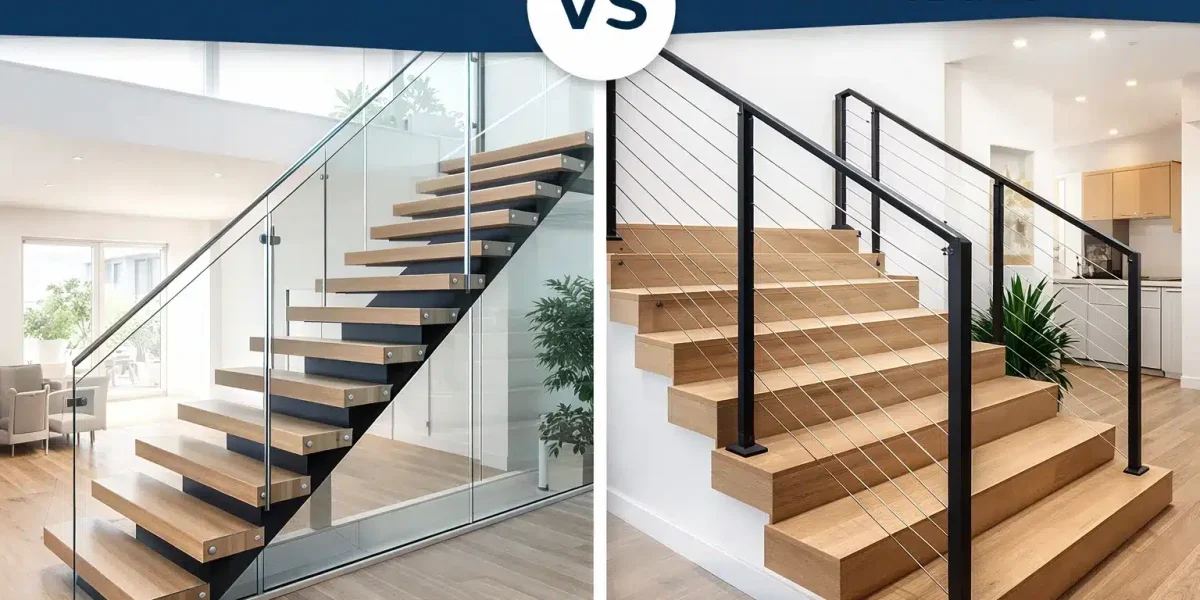
Glass stair railings use tempered safety glass panels to create a clean and open barrier along the staircase. Instead of traditional vertical balusters, large glass panels form a transparent guard that maintains visibility across the space.
Because glass is transparent, it allows natural light to travel freely through the room. This feature makes glass railings especially popular in open concept homes where homeowners want to preserve a sense of openness.
Many modern homes pair glass railings with metal or wood stair structures to create a balanced look between warmth and minimalism. If you want to explore custom designs, you can learn more about glass stair railing systems available for modern homes.
What Are Cable Railings?
Cable railings use horizontal stainless steel cables stretched between metal or wood posts. These cables replace traditional balusters and create a sleek, linear appearance along the staircase or balcony.
The tensioned cables maintain safety while preserving visibility across the space. Because they are thin and minimalist, cable railings often appear lighter than traditional railing systems.
This style is commonly used in contemporary homes, industrial interiors, and modern outdoor decks. Cable systems are valued for their simplicity, durability, and ability to complement a wide range of architectural styles.
Visual Design Differences
The most noticeable difference between these railing systems is their visual impact. Glass railings create a seamless, almost invisible barrier that allows the staircase to blend into the surrounding architecture.
Cable railings, on the other hand, emphasize horizontal lines. The thin cables add subtle structure while maintaining openness. Instead of disappearing visually like glass panels, they contribute a modern design detail to the staircase.
In many contemporary interiors, glass railings create a more luxurious appearance. Cable railings often feel slightly more industrial or architectural, which can be perfect for certain design styles.
Which Option Makes a Space Feel Larger?
Glass stair railings typically make a space feel larger because they remove visual barriers. The clear panels allow the eye to travel freely across the room, which enhances the feeling of openness.
This effect is particularly noticeable in homes with natural light and open floor plans. Glass railings help maintain visual continuity between levels of the home.
Cable railings still allow light and visibility, but the horizontal cables create subtle visual lines that break the space slightly more than glass panels do.
Safety and Building Code Considerations
Both glass and cable railing systems can meet residential safety requirements when properly designed and installed. Tempered glass used in stair railings is engineered to withstand significant force and meet building code standards.
Cable railings rely on strong tension and durable materials such as stainless steel cables and metal posts. Proper spacing between cables is essential to meet safety regulations.
Professional installation ensures that either railing system complies with local building codes. Experienced contractors evaluate stair dimensions, spacing, and structural support before installation begins.
Maintenance and Cleaning
Maintenance is another factor homeowners often consider. Glass railings require regular cleaning because fingerprints and smudges can be visible on the panels.
However, cleaning glass is generally straightforward and can be done using standard glass cleaners. In return, homeowners get a pristine and modern appearance that enhances the interior.
Cable railings require less frequent cleaning but may need occasional tightening to maintain proper cable tension. Stainless steel cables are resistant to corrosion, making them durable over time.
Durability and Longevity
Both railing systems are designed to last for many years when installed correctly. Tempered glass panels are extremely strong and engineered for structural applications.
Cable railings are also highly durable, particularly when stainless steel components are used. These materials resist rust and weather damage, which makes cable systems popular for outdoor installations.
For indoor staircases, both options provide long term durability with minimal structural wear.
Cost Comparison
Glass stair railings typically cost more than cable railings due to the materials and installation complexity involved. Custom glass panels, hardware systems, and precision installation contribute to the overall project cost.
Cable railings are often more budget friendly while still delivering a modern aesthetic. The materials are simpler and installation can be slightly less complex.
However, the final price depends on many factors including staircase size, materials, and overall design. Homeowners planning a staircase renovation can also explore custom stair design options that integrate modern railing systems.
Which Style Works Best for Modern Homes?
Glass stair railings are often the preferred choice for homeowners seeking a luxurious and highly contemporary interior. They maximize light, maintain openness, and create a sleek architectural look.
Cable railings are ideal for homeowners who want a modern design with subtle structure and slightly lower costs. They work especially well in homes with industrial, transitional, or modern farmhouse styles.
The best choice ultimately depends on the overall design of the home, budget considerations, and personal style preferences.
Professional Installation Matters
Regardless of which railing system you choose, professional installation is essential. Stair railings are structural safety elements, and precision is required to ensure both safety and visual quality.
Experienced stair contractors evaluate measurements, structural support, and material compatibility before installation begins. This process ensures that the railing system performs properly and meets building standards.
If you are planning a stair renovation or new construction project, you can contact the Ustairs team to discuss design options and professional installation.
Final Thoughts
Glass stair railings and cable railings both offer modern alternatives to traditional railing systems. Glass panels provide a clean, luxurious look that maximizes light and openness. Cable railings introduce sleek horizontal lines and practical durability.
For homeowners prioritizing transparency and elegance, glass railings are often the ideal choice. For those seeking a minimalist design with strong architectural character, cable railings can be an excellent option.
With the right design approach and professional installation, either railing style can transform a staircase into one of the most striking features of a modern home.
FAQs
Are glass stair railings safe for homes?
Yes. Tempered glass used in stair railings is engineered for strength and meets residential safety standards when installed correctly.
Do cable railings block the view?
No. The thin horizontal cables preserve visibility and allow light to pass through, making them suitable for open interiors.
Which railing system requires more maintenance?
Glass railings may require more frequent cleaning, while cable railings may occasionally need tension adjustments.
Are glass railings more expensive than cable railings?
In many cases, yes. Glass railings often involve higher material and installation costs compared to cable systems.
Which railing style is more modern?
Both are considered modern, but glass railings often create a more luxurious and seamless contemporary appearance.